Glen Urquhart Community Council Objection (Part 4)
Here is the final instalment from the GUCC Objection submitted to the Energy Consents Unit.
Summary
This application has generated a deep and widespread sense of unease with our local community. Many residents feel overwhelmed by the scale and complexity of the proposal and there is a strong perception that the development is being imposed without genuine regard for the unique character of the area or the voices of those who live here.
The unique and iconic landscape of Loch Ness – renowned worldwide for its natural beauty, cultural significance, and tranquil setting – is at the heart of this concern. As a community, we see ourselves as custodians of this landscape, with a responsibility to protect its integrity not only for ourselves but for future generations. The prospect of industrial-scale infrastructure altering this cherished environment has left people feeling powerless, anxious, and disconnected from decisions that will shape their home for generations.
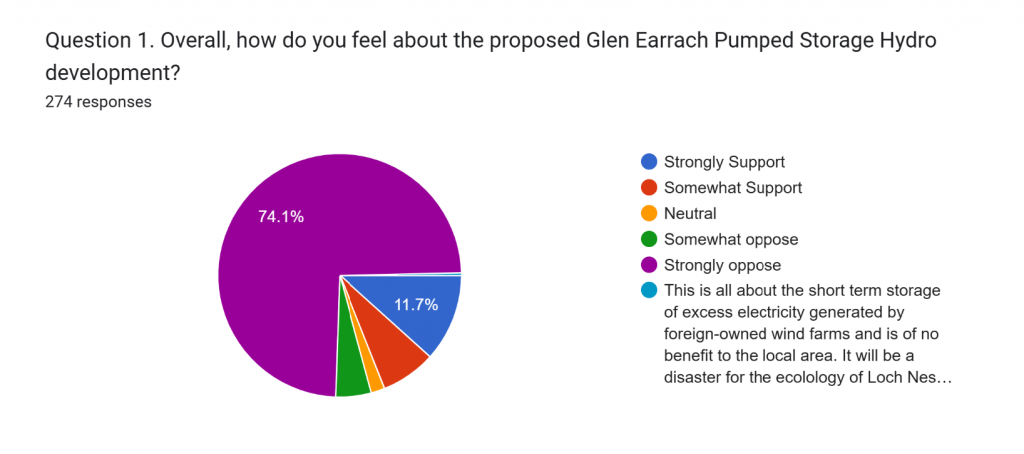
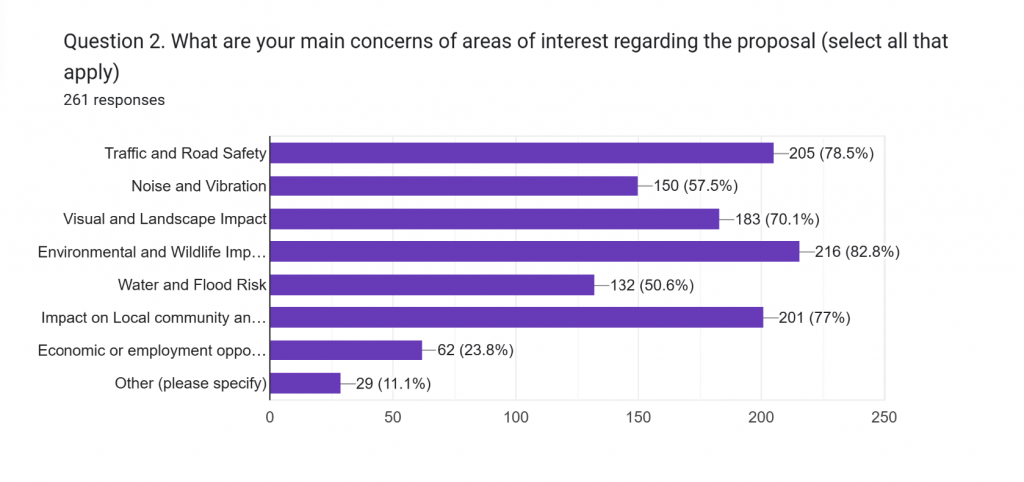
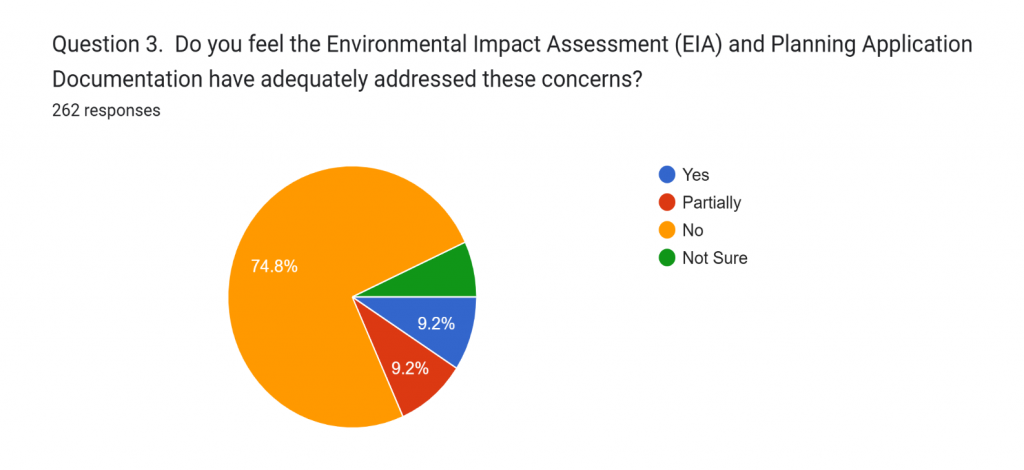
This feeling is reflected in the voices raised through our community poll – detailed results in Appendix 1.
Our key concerns, which we do not believe are adequately addressed in the EIA and are contrary to the principles in the Town and Country Planning ((Environmental Impact Assessment) (Scotland) Regulations 2017 and National Planning Framework 4 (NPF4), are:
2.1 Significant visual impact
The development will cause major visual harm to the Loch Ness and Duntelchaig Special Landscape Area (SLA) and surrounding viewpoints, including Meall Fuar-mhonaidh and Foyers. These are valued for their natural beauty and recreational use. The EIA admits that even after 15 years, some visual impacts will remain significant. This is not in line with NPF4’s aim to protect Scotland’s natural assets and scenic landscapes.
The visual assessment appears selective, with key viewpoints and community perspectives underrepresented. This selective presentation of residual effects undermines the transparency and integrity of the EIA process, as required under the EIA Regulations 2017.
2.2 Adverse Impacts on Loch Ness
The proposal would significantly alter the natural hydrology of Loch Ness, a globally iconic and ecologically sensitive body of water. The Environmental Impact Assessment (EIA) acknowledges potential impacts on water levels, aquatic habitats, and fish populations, including Atlantic salmon. However, the mitigation measures (particularly the proposed upgrades to Dochfour Weir) are not confirmed, and therefore cannot be relied upon to manage these risks effectively. Without this infrastructure in place, the project could cause irreversible harm to the loch’s ecosystem and downstream water systems.
2.3 Cumulative Impacts Not Fully Considered
Loch Ness already hosts the Foyers PSH scheme and has other consented or proposed developments, including Red John and Loch Kemp. The cumulative impact of multiple PSH schemes on the loch’s thermocline, surface currents, and salmon migration patterns is not fully understood or addressed in the Glen Earrach application. This omission is inconsistent with the requirements of the Town and Country Planning (Environmental Impact Assessment) (Scotland) Regulations 2017, which mandate a thorough assessment of cumulative effects.
2.4 Potential Harm to Wild Salmon
The Ness District Salmon Fishery Board and other stakeholders have raised serious concerns about the impact of PSH schemes on wild Atlantic salmon populations. Changes in water temperature, flow, and migration routes—particularly during smolt migration—could have long-term consequences for this protected species. The Glen Earrach proposal does not provide sufficient evidence of mitigation or monitoring commitments to ensure salmon populations will be safeguarded.
2.5 Traffic and Access Impacts
The construction phase would generate up to 178 HGV trips per day, placing significant strain on rural roads such as the A831 and A82. These roads are already busy with local and tourist traffic. The proposed Construction Traffic Management Plan lacks enforceable detail and does not guarantee protection for local communities or road safety. This is contrary to the principles of National Planning Framework 4 (NPF4), which emphasises sustainable infrastructure and community wellbeing.
2.6 Ecological Damage and Loss of Protected Habitats
The development would result in the permanent loss of ancient woodland, blanket bog, and sensitive habitats, including areas important for protected species such as golden eagle, otter, and water vole. The EIA admits that some of these losses are significant, and while some mitigation is proposed, much of it is vague, long-term, or dependent on future plans and cannot guarantee full ecological recovery. This does not meet the standards of the Scottish Biodiversity Strategy or the precautionary principle embedded in Scottish planning law under the EIA Regulations.
2.7 Lack of binding mitigation oversight or community safeguards
Many of the proposed mitigation measures are described only in outline form (e.g. CEMP, LEMP, CTMP) with no binding commitments timelines or enforcement measures. There is also no clear framework for independent oversight or community involvement in monitoring environment impacts or ensuring compliance. This makes it difficult to assess whether the environmental harms will truly be avoided or reduced. The EIA Regulations require that mitigation be clearly defined and enforceable, which is not the case here.
2.8 Inconsistencies with the Environmental Authorisations (Scotland) Amendment Regulations 2025
The project involves activities (e.g. water abstraction, waste, emissions) that fall under the integrated authorisation framework regulated by SEPA
The EIA does not clearly demonstrate how the project will comply with the new regulatory standards introduced in the 2025 Regulations.
2.9 Overstatement of Socioeconomic Benefits Without Secured Mitigation
The EIA claims “Significant Beneficial” effects from job creation and local economic activity. However, these benefits are speculative and not secured through planning conditions or legal agreements. There is no binding commitment to local hiring, training, or procurement. The EIA also acknowledges a “Minor Adverse” effect on housing, health services, and community cohesion due to the influx of construction workers – impacts that are not adequately mitigated. This is inconsistent with experiences from other energy projects, where local housing stock has been absorbed by developers, displacing residents. Without safeguards, this development risks harming rather than helping the local community.
This approach fails to meet the requirements of NPF4 Policy 11 (Energy) and Policy 25 (Community Wealth Building), which demand demonstrable and secured local benefits.
2.10 Inadequate Consideration of Climate Risks and Net Zero Compliance
The EIA claims a “Significant Beneficial” climate impact due to long-term emissions savings; this is misleading. It fails to:
- Offset the over 1 million tonnes of CO₂e generated during construction, including emissions from peatland loss.
- Address the “High Adverse” climate risks identified in its own Climate Change Risk Assessment (CCRA), such as flooding and storm damage, which remain significant even after mitigation.
- Provide a binding carbon management or adaptation plan, as required under NPF4 Policy 2 and the Climate Change (Scotland) Act 2009.
These omissions undermine the credibility of the project’s alignment with Scotland’s 2045 net zero target.
2.11 Inadequate Community Safeguards and Oversight
The proposal lacks a Community Benefit Agreement or a Community Liaison Committee with statutory powers to oversee construction and operational impacts.
Given the scale and duration of the project (8 years of construction, 125 years of operation), this is a critical omission.
The Highland Council’s Local Development Plan and the National Planning Framework 4 (NPF4) both emphasise the importance of community engagement, environmental justice, and local benefit. These principles are not sufficiently embedded in the current scheme.
2.12 Request for Conditions and oversight mechanisms
Should the project be approved, it is essential that a robust and enforceable framework of conditions is established to ensure environmental protection, community benefit, and accountability. This must include:
• _A legally binding Community Benefit Agreement, developed in consultation with local residents, to ensure long-term investment in local services, infrastructure, and environmental stewardship.
• The formation of an independent Community Liaison Committee, with representation from local residents, community councils, and statutory bodies, to oversee construction and operational impacts, and to provide a formal mechanism for raising concerns and ensuring transparency.
• A Mitigation and Monitoring Plan with clearly defined, enforceable targets and timelines for ecological restoration, noise and traffic management, and water quality protection, including independent auditing and public reporting.
• A Compensatory Planting Scheme to fully offset the loss of ancient and semi-natural woodland, with native species and long-term management commitments in line with the Scottish Government’s Control of Woodland Removal Policy.
• Road and infrastructure improvements to mitigate the impact of construction traffic, including upgrades to the A831 and A82, safe crossing points, and traffic calming measures in affected communities.
• Recreational path improvements, including permanent upgrades and diversions to the Affric Kintail Way, Meall Fuar-mhonaidh summit route, and other core paths, to ensure continued public access and enjoyment during and after construction.
• Confirmed and completed upgrades to Dochour Weir, including fish passage improvements and seasonal flow controls, must be in place and operational before the Glen Earrach scheme becomes active. These upgrades are critical to managing water levels in Loch Ness and the River Ness and to safeguard migratory fish.
These measures must be secured through planning conditions or legal agreements under the Town and Country Planning (Scotland) Act 1997 and monitored by the relevant authorities to ensure compliance throughout the lifespan of the development.
Appendix 1: Summary of community responses
A Google Forms Poll (with online and hard copies) was used (by the GUCC) to assist in gathering community input.
The following questions were asked:
1. Overall, how do how do you feel about the proposed Glen Earrach Pumped Storage Hydro development?
2. What are your main concerns of areas of interest regarding the proposal (select all that apply)
3. Do you feel the Environmental Impact Assessment (EIA) and Planning Application Documentation have adequately addressed these concerns?
4. How do you think the development would affect your quality of life or the local area?
5. What changes or conditions would you like to see included if the project goes ahead?
6. Do you have any additional comments or suggestions?
The responses to questions 1-3 are shown below, whereas the answers provided to questions 4-6 form the final 30 pages of appendices, which are an integral part of the GUCC objection. This can be found on the ECU website, or you can email us we and we can send you a copy.